According to the reviews, this is a must-read book to understand the deep background of the Civil Rights movement of the 1950s and 1960s that allowed the Supreme Court to essentially abrogate the protection of the 14th and 15th Amendments as they applied to African Americans. This meant that discrimination against freedmen and their descendents was essentially thrown back into the hands of land-owning southerners. President Obama as a former attorney could leverage these historical accounts to prevent similiar circumstances from continuing to occur in digital communication networks where African Americans are not given fair opportunities to be network owners.
Also on the journey to Digital Equality, society must consider digital media education. The reviewers state this is the most thorough book you will read on Brown v. Board of Education. The author writes based on his experience as a lawyer, a historian and a journalist who witnesses a multitude of events which he depicts.
In some respects, this book could inform President Obama and his team on how the Supreme Court and its process of decision-making positively and negatively impacts Education Equity and Digital Equality.
Purchase and share your views.
Thursday, February 10, 2011

Tuesday, February 8, 2011
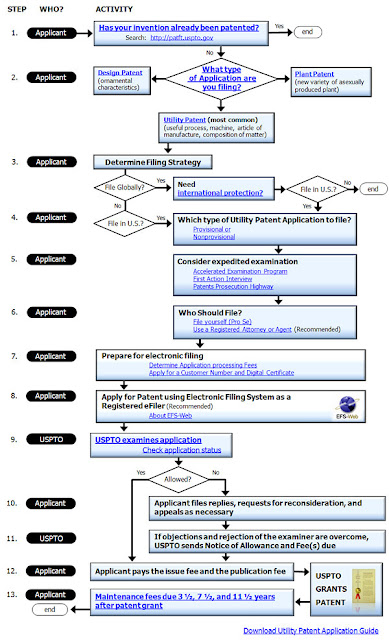
Electronically Filing a Patent requires critical digital literacy
When we got to the Step 5 section of the diagram the site started challenging the Fonts embedded in our PDF document. A few top content management staff was summons to address the following error messages and get the patent filed. After the event, one neophtype asked whether this was a good example of critical digital literacy. The other members smiled as to imply Absolutely!
The attached PDF file references a non-embedded font: ArialMT. Please remove file, embed the font and reattach.
The attached PDF file references a non-embedded font: TimesNewRomanPS-BoldMT. Please remove file, embed the font and reattach.
The attached PDF file references a non-embedded font: TimesNewRomanPS-ItalicMT. Please remove file, embed the font and reattach.
The attached PDF file references a non-embedded font: Verdana. Please remove file, embed the font and reattach.
The attached PDF file references a non-embedded font: Verdana-Bold. Please remove file, embed the font and reattach.
The attached PDF file references a non-embedded font: TimesNewRomanPS-BoldItalicMT. Please remove file, embed the font and reattach.
The attached PDF file references a non-embedded font: ArialMT. Please remove file, embed the font and reattach.
The attached PDF file references a non-embedded font: TimesNewRomanPS-BoldMT. Please remove file, embed the font and reattach.
The attached PDF file references a non-embedded font: TimesNewRomanPS-ItalicMT. Please remove file, embed the font and reattach.
The attached PDF file references a non-embedded font: Verdana. Please remove file, embed the font and reattach.
The attached PDF file references a non-embedded font: Verdana-Bold. Please remove file, embed the font and reattach.
The attached PDF file references a non-embedded font: TimesNewRomanPS-BoldItalicMT. Please remove file, embed the font and reattach.

Saturday, February 5, 2011
Saying goodbye to public schools and “just-in-case learning”
Is technology opening up a “golden age” of learning for everyone? Allan Collins and Richard Halverson argue, without placing any bets, that it might. Adult education and learning centers are growing, distance education through the Internet is more available, and companies are issuing their own technical certificates, among other developments.
The key question is how to improve education outside of schools, since that’s where most of the learning will take place. Collins and Halverson argue this shift is inevitable. Schools – which foster “just-in-case learning” – are outmoded compared to technology, which fosters “just-in-time learning.”
In the real world specialization is replacing standardized assessments, customization is more important than uniform learning, diverse knowledge sources are more important than expert teachers, learning by doing is more important than learning by acquisition, and reliance on outside sources is more important than knowledge in the head.
But visionaries are need to make sure values such as equity and diversity continue to be pursued outside of public education – pursuits, I would argue, that never really came close to succeeding. Can the new golden age do any worse?
Read the full article, RETHINKING EDUCATION IN THE AGE OF TECHNOLOGY:
THE DIGITAL REVOLUTION AND THE SCHOOLS.
URL: http://ocw.mit.edu/courses/media-arts-and-sciences/mas-714j-technologies-for-creative-learning-fall-2009/readings/MITMAS_714JF09_read03_coll.pdf
Friday Night DML E3D Session - extract
February 04, 2011 - DML E3D Level P session
Do you need a good tracker that you can use to track your partners and see where they go?
To the male facilitator's surprise none of the 5 females wanted to track their male partners. The other males in the session seemed equally surprised. The group discussed some of the options when it comes to accomplishing this, as well as some of the alleged bonuses: you can see much more than where the person is. In fact, with today's digital technologies, you will see where the person is in real-time based on the GPS data, as well as text messages being sent and received. You can also see emails, browser history, phone contact information and call logs - if they are carrying a smartphone (i.e. iPhone).
The participants' questions for our readers are listed below. We would appreciate your responses:
Would you approve of being tracked?
Would you purchase a tracker for your partner?
Would you feel less trusted if you partner requested that you be tracked?
Would you be interested in a method to disable the tracker?
Would you consider wedding rings a form of tracking?
Thursday, February 3, 2011
Looking for work... a job? Improve your chances with Critical Digital Literacy.
Without digital literacy experience, a person attempting to use any of the following strings of text in a Google search could become discouraged, discontented and disappointed faster than it would take a million results to be returned.
"Looking for a job"
About 4,130,000 results (0.16 seconds) - major results from job search, advertisement, and referral sites
"Looking for work"
About 2,870,000 results (0.13 seconds) - major results from individuals, recruiters, advertisers
"Found a job"
About 2,460,000 results (0.20 seconds)
- Ironically most results relate to Talking Head lyrics
The following sources would provide some direction for getting
started but your best options is to enroll in a DML E3D oriented program
- contact dml.e3d@gmail.com for sources.
"Looking for a job"
About 4,130,000 results
- Ironically most results relate to Talking Head lyrics
The following sources would provide some direction for getting
started but your best options is to enroll in a DML E3D oriented program
- contact dml.e3d@gmail.com for sources.
Wednesday, February 2, 2011
Digital Records vs Antiquated paper record-keeping

Who: Arlington National Cemetery, Booz Allen Hamilton, Science Applications International Corp. and Mitre
What: Antiquated paper record-keeping and lack of oversight
When: Over a ten month period
Where: Arlington, Virginia
Why: Greed, Digital Inequity, ...
Washington Post full story...
Do it yourself sources;
Discovering the Digital Record -- The Questions for Examination
The Digital Records Conversion Process: Program Planning, Requirements, Procedures

Selecting Storage Media for Long-Term Access to Digital Records.: An article from: Information Management Journal

Monday, January 31, 2011
The Difference: Digital Literacy Creates Better Groups, Firms, Schools, and Societies
 Viva la Difference! Who can takes us on a really enagaging tour that examines why digital literacy matters. You thought the subject was simple? Well it is if you think in terms of the usual ways the media pigeon-hole digital technologies (Google, Microsoft) but as "DML E3D" quickly shows participants - digital media literacy can be framed in many, many more ways: and more than that - it provides proof after proof for why it makes a positive impact.
Graduates from last years Level I sessions have expressed love for the facilatitor's entertaining command of language, his knowledge of the subject and his clear enthusiasm for the topic. This is one of those rare opportunities that, alongside the transformative experiences after reading the likes of Blink, Wisdom of Crowds and Tipping Point, deserves wide adoption and social recommendations. In many ways it the 5 levels of engagment are all part of an unabashed celebration of human-ness. Leave a comment or send and email to dml.e3d@gmail.com to get more information about registration.
Subscribe to:
Posts (Atom)